Digital workflow
A continuous flow, from chair to finished piece.
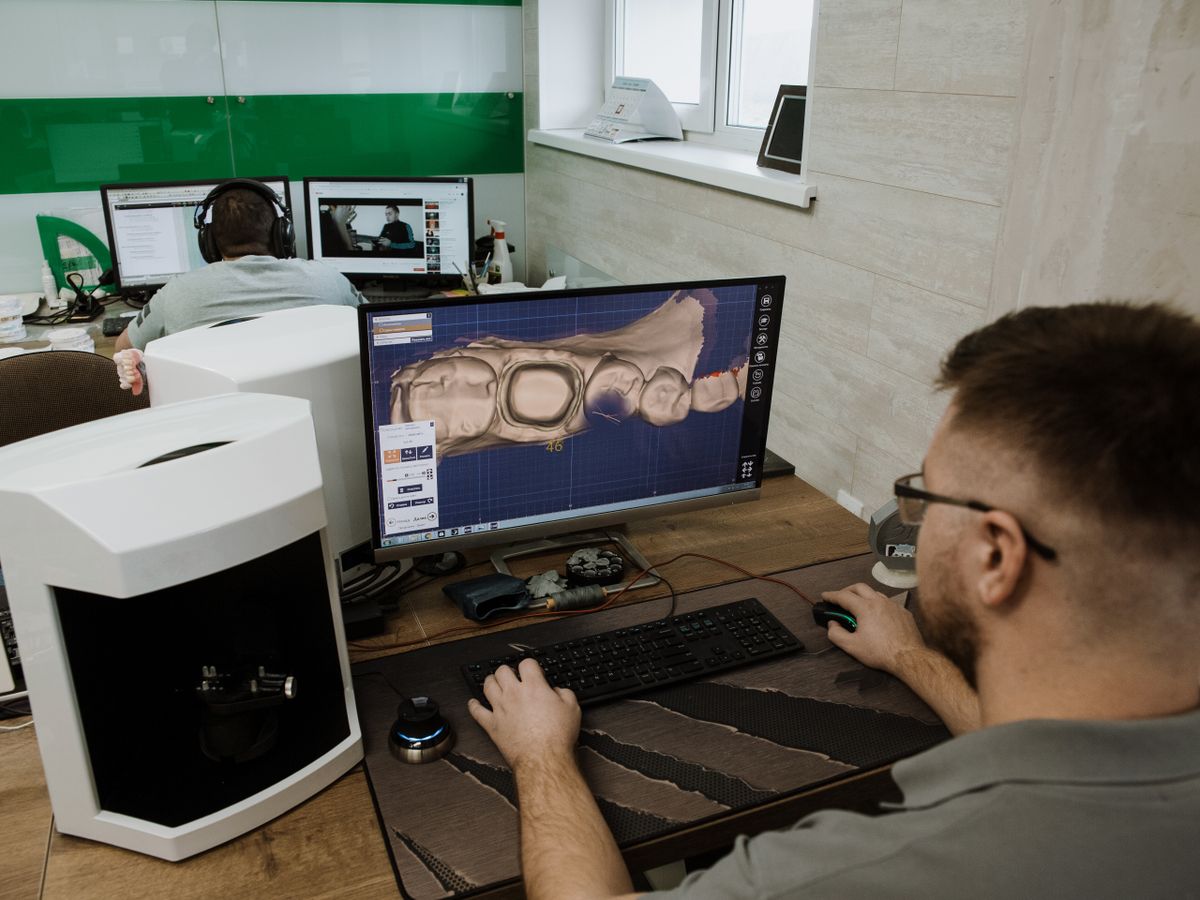
Digital impressions, STL file transfer and CAD/CAM design. Digital design delivers reproducible precision, case after case, and shortens lead times without compromising the finish.
01 · How it works
Four steps, zero wasted back-and-forth.
-
01
Scan
You scan at the practice. We accept STL exports from most intraoral scanners on the market.
-
02
Transfer
Sent via Digilab, your manufacturer's portal or a share link. The case is logged on arrival.
-
03
Design
CAD modelling, virtual fit check and occlusion validated before anything is produced.
-
04
Production
5-axis milling or 3D printing, then finishing by hand. The digital file is archived.
02 · What it changes for you
Fewer remakes, more predictability.
Digital does not replace craft: it removes the sources of imprecision. No impression material distorting, no shipment dragging on, no model broken in transit.
What is left is the work that actually matters — designing the case and finishing the piece.
Reproducible precision
The same file gives the same result. A remake is produced identically, with no new impression.
Shorter lead times
Transfer is instant. The time saved on logistics goes back into finishing.
Patient comfort
No tray and no material in the mouth. The scan is quick and far better tolerated.
Archived cases
Every digital file is kept. A lost splint can be remade without seeing the patient again.
03 · Compatibility
Your scanner, our laboratory.
We work from open STL files. If your scanner exports in a proprietary format, get in touch: in most cases a bridge exists.
- STL
- PLY
- OBJ
- Digilab
- exocad
- 3Shape
- Medit
- iTero
04 · Production floor
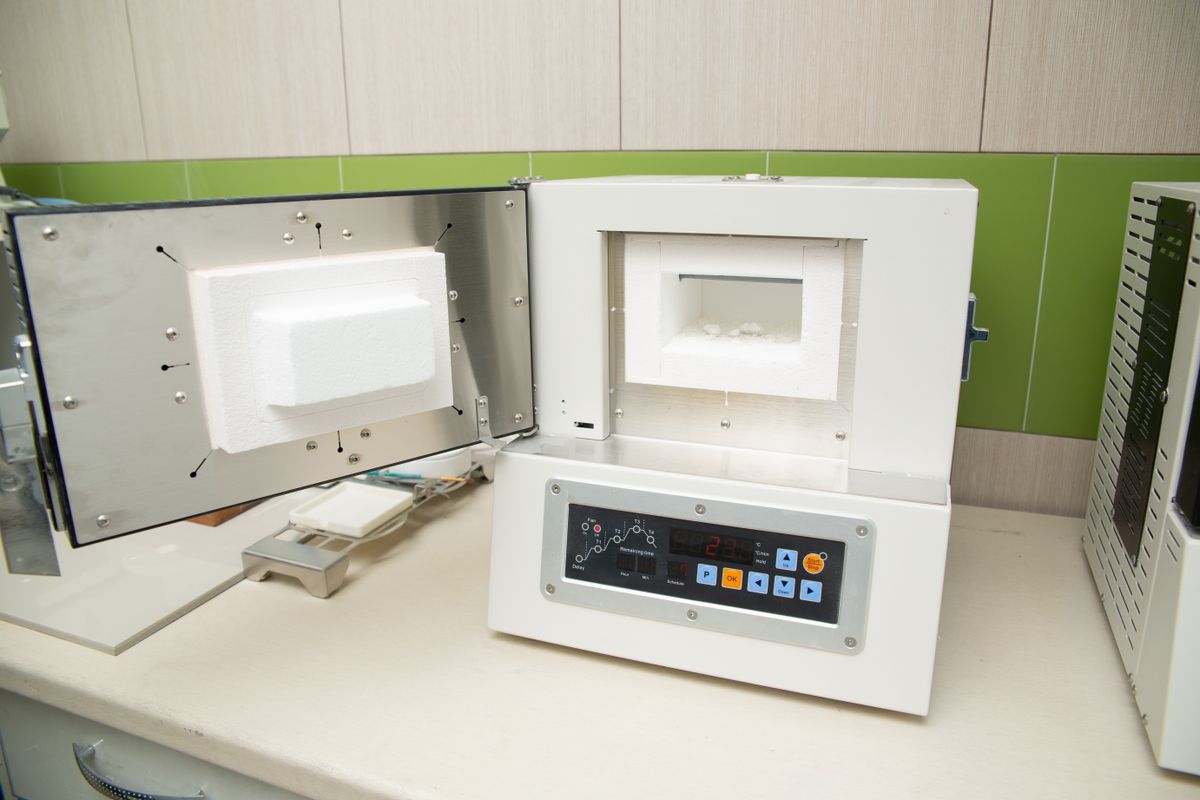
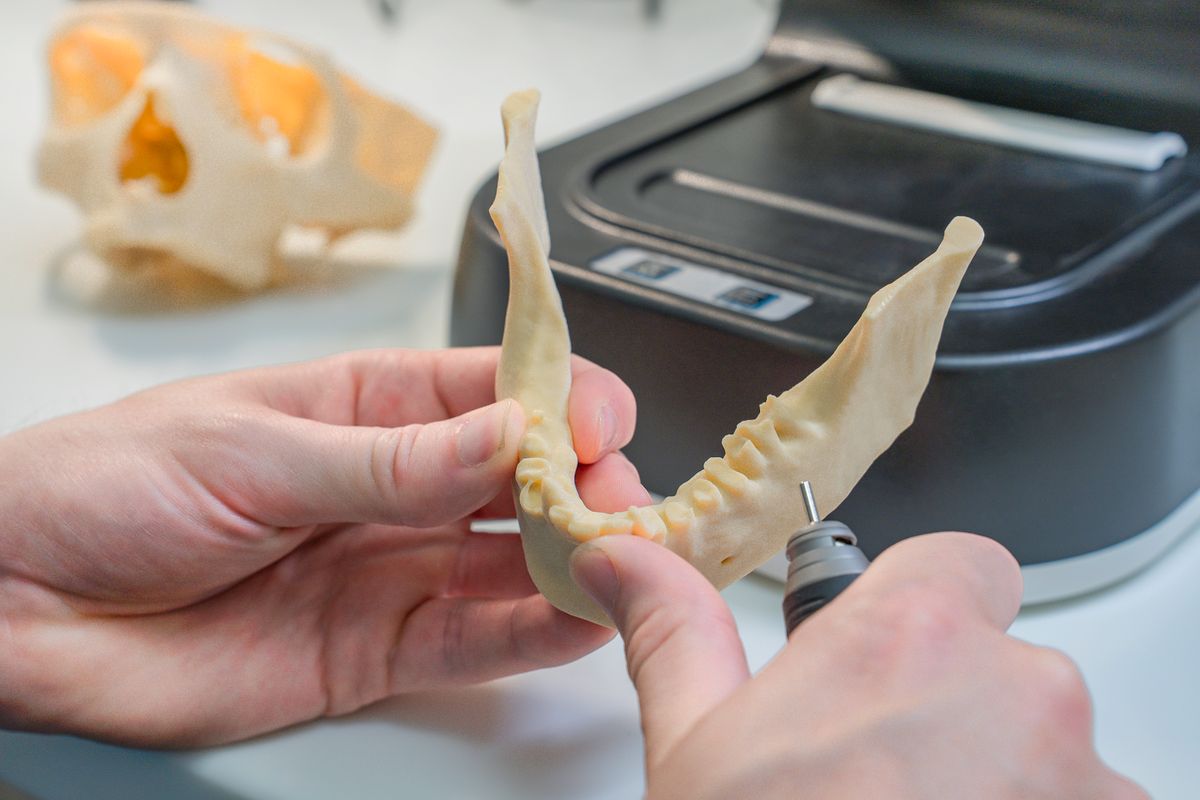
Milling gives precision. The hand gives character.
5-axis milling for frameworks and monolithic pieces, 3D printing for models and splints, ceramic furnaces for layering. The machine prepares, the technician finishes.